
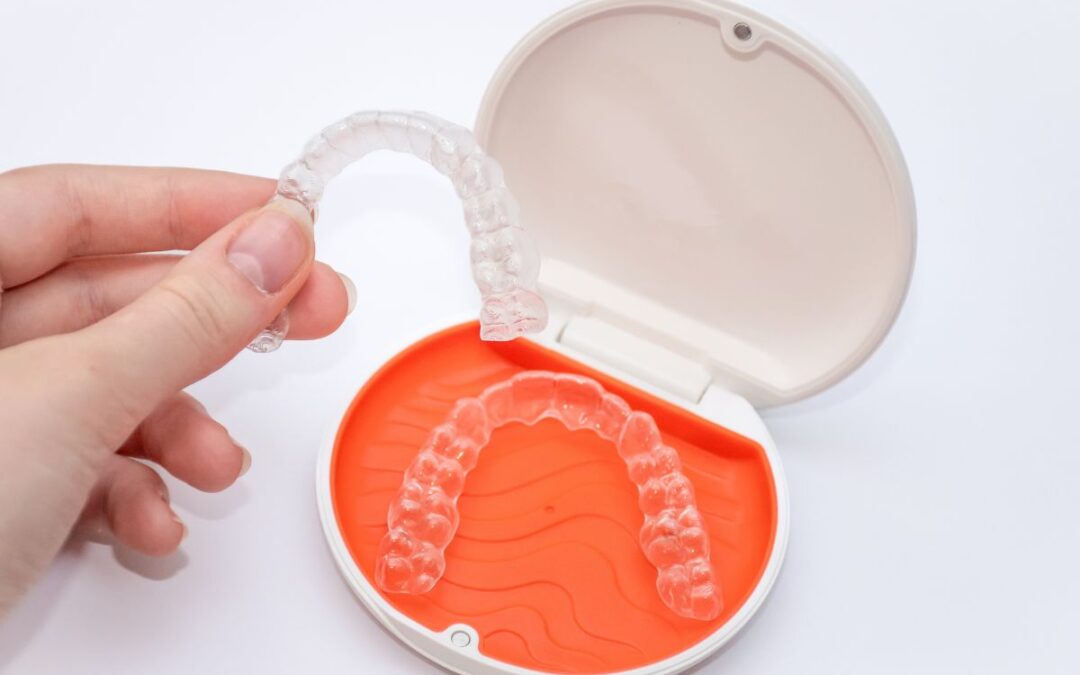
You put in your Invisalign aligner and notice something you did not expect: the tray fits closely around most of your teeth, but there is a small gap around one tooth.
It is easy to wonder whether the aligner is defective or your tooth isn’t moving correctly. A small space between an aligner and a tooth can happen for several reasons, and the meaning depends on where the gap is, how large it is, and whether it changes over the course of treatment.
Understanding the possible causes can help you decide when to continue monitoring the aligner and when to contact your dental team.
What Should an Invisalign Aligner Look Like?
Invisalign aligners are custom-made to fit over your teeth and apply controlled forces to guide them toward planned positions.
The tray should generally sit securely over the teeth. However, it may not look perfectly identical on every tooth at every stage.
Small differences can occur because teeth have different shapes and because the aligner is designed to create movement rather than simply hold the teeth exactly where they are.
The important question is whether the aligner is tracking the planned tooth movement.
Why Is There a Gap Around One Tooth?
Several situations can cause a visible gap.
The Tooth Is Still Catching Up
Sometimes the tooth has not moved completely into the position expected for that stage of treatment.
If a tooth is slightly behind the planned movement, the aligner may not fit as closely around it.
This is often referred to as a tracking issue.
The Aligner Is Not Fully Seated
An aligner may appear to have a gap simply because it has not been pushed fully into place.
This can happen if the aligner is not positioned correctly or if something is interfering with the fit.
Following the instructions provided by your dental team is important when seating the aligner.
The Tooth Has an Attachment
Some Invisalign treatment plans use small tooth-colored attachments to help the aligner grip specific teeth and create more controlled movements.
If an attachment is missing, damaged, or not engaging correctly with the aligner, the fit can look different.
The Aligner Is Damaged
Cracks, warping, or other damage can affect how an aligner fits.
Heat can also damage clear aligners. For example, using very hot water to clean them can distort the plastic.
If the tray has visibly changed shape, let your dental team know.
The Tooth Is Moving in a Different Way
Every tooth responds individually to orthodontic forces. Sometimes a tooth does not move exactly as predicted, and the treatment plan may need to be adjusted.
This does not necessarily mean the treatment has failed. Orthodontic treatment often involves monitoring progress and making changes when necessary.
Does a Gap Mean Invisalign Is Not Working?
Not automatically.
A small gap does not necessarily mean your Invisalign treatment has stopped working.
However, a persistent or increasing gap can indicate that the aligner is not tracking as expected.
If the same tooth continues to sit away from the aligner, especially across multiple trays, it is worth bringing the issue to your dental provider’s attention.
Your dentist or orthodontic provider can examine the tooth and determine whether it is moving as planned.
What Should You Do If One Tooth Does Not Fit?
First, make sure you are wearing the aligner according to your treatment instructions.
Check that:
- The aligner is positioned correctly.
- There is no visible damage.
- Any attachments are still present.
- You are wearing the aligner for the recommended amount of time.
- You are changing trays according to your prescribed schedule.
Do not attempt to bend, cut, heat, or reshape the aligner yourself.
If the gap remains, contact your dental team rather than trying to correct the fit on your own.
Could Wearing Aligners Less Often Cause a Gap?
Yes, inconsistent wear can affect progress.
Invisalign works by applying forces for the prescribed amount of time each day. If the aligners are removed too frequently or worn for fewer hours than instructed, the teeth may not move according to the planned schedule.
This can make a later aligner feel tighter or cause a tooth to appear less closely aligned with the tray.
Following your provider’s wear instructions consistently is an important part of successful Invisalign treatment.
What If the Next Aligner Fits Worse?
Do not automatically move forward to the next tray if your current aligner is not fitting properly.
Your dental team may recommend staying in the current aligner longer, returning to a previous tray, or making another adjustment depending on your individual treatment plan.
There is no universal solution because the reason for the poor fit matters.
A quick evaluation can prevent you from spending unnecessary time wearing a tray that is not tracking correctly.
Can Invisalign Attachments Affect the Fit?
Yes.
Attachments are small shapes bonded to the surface of certain teeth. The aligner fits over them and uses them to create specific forces.
If an attachment falls off, the aligner may no longer engage that tooth as intended.
If you notice that an attachment is missing, contact your dental office rather than waiting until your next routine visit.
Invisalign Treatment Requires Monitoring
Clear aligners may seem simple because they are removable and less noticeable than traditional braces, but they still require professional supervision.
During Invisalign treatment, your dental provider monitors tooth movement and the way your bite is changing.
This helps identify issues such as poor tracking, unexpected tooth movement, or changes that require modifications to the treatment plan.
Conte Dentistry in Red Bank offers Invisalign treatment and Invisalign Teen as part of its orthodontic services. Patients can discuss concerns about aligner fit, tooth movement, and treatment progress during their visits.
Conclusion: A Small Gap Is Worth Watching
A gap around one tooth does not automatically mean something is wrong with your Invisalign aligner. The tooth may simply be catching up, the tray may not be fully seated, or an attachment may need attention.
However, if the gap remains, becomes larger, or appears on multiple aligners, it is important to have it checked rather than trying to modify the tray yourself.
If you have concerns about the fit of your Invisalign aligners, visit our dental office in Red Bank, NJ, for an evaluation.